Gentle simmer countdown and food-safety guide for juicy, shreddable chicken breast, thighs, and tenders.
Time is a workflow tracker. Temperature is the safety guarantee.
Always probe the thickest center portion without touching bone. Once your timer rings, verify that the internal temperature has reached at least 165°F.
Cooking times vary dramatically between lean white meat and collagen-rich dark meat. Here is your definitive cut guide for juicy, food-safe results every time.
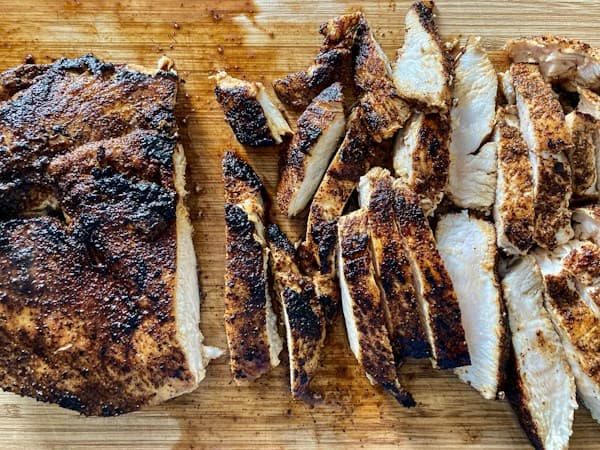
Typical Size: 6–8 oz (170–225g)
Lean, tender cut that cooks relatively quickly. Best kept under a gentle simmer to avoid drying out.
Best for: Shredded chicken, Caesar salads, meal prep bowls, chicken tacos
Chef tip: Remove immediately when thickest core reaches 165°F (74°C). Overcooking past 170°F squeezes out moisture quickly.
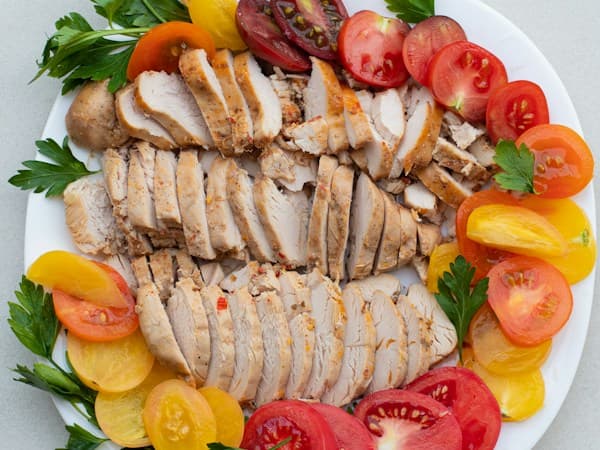
Typical Size: 10–14 oz (280–400g)
Large commercial breasts with significant depth requiring longer heat penetration to reach core safety.
Best for: Batch meal prep, large shredded chicken recipes
Chef tip: For even cooking, consider butterfly cut or light pounding before simmering, or test multiple thick points with your probe.
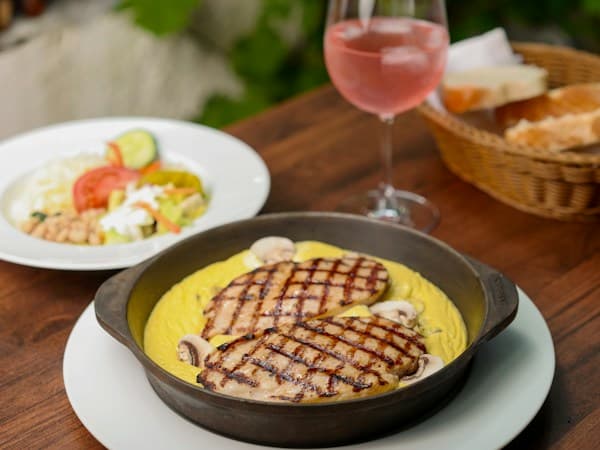
Typical Size: 12–16 oz (340–450g)
Rib cage bone insulates the meat, retaining moisture and producing a richer poaching broth.
Best for: Chicken noodle soup, rich chicken salads, pot pies
Chef tip: Insert probe into the center of the breast meat, being careful not to touch the rib bone which can give false high readings.
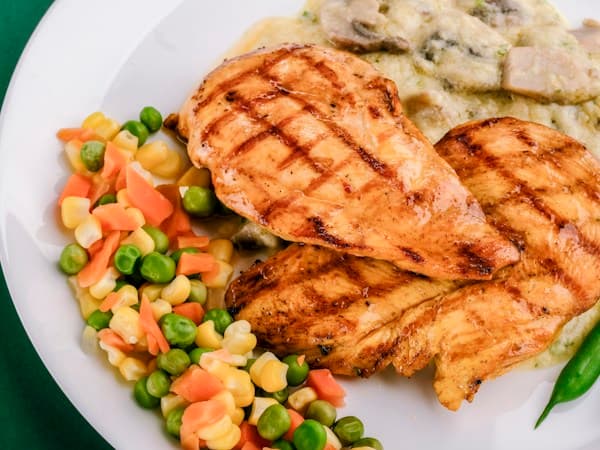
Typical Size: 4–6 oz (115–170g)
Juicy dark meat with natural intramuscular fat that remains succulent even with slight carryover heat.
Best for: Curries, pulled barbecue chicken, enchiladas, noodle soups
Chef tip: While safe at 165°F (74°C), dark meat thighs are noticeably more tender and melt-in-mouth when cooked to 175°F (79°C).
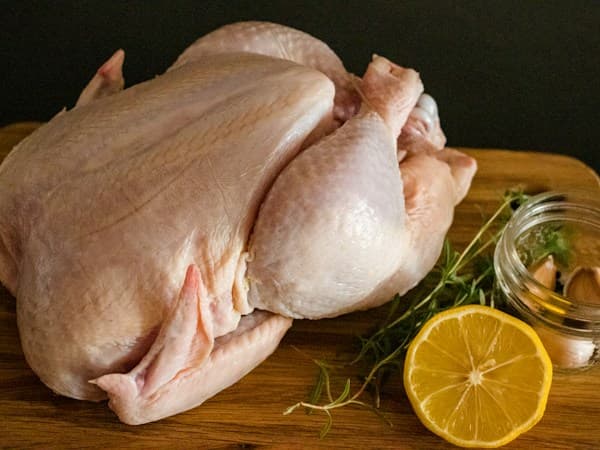
Typical Size: 5–7 oz (140–200g)
Dense connective tissue and bone give exceptional flavor. Requires steady simmering to melt collagen.
Best for: Braised stews, ramen broths, comforting shredded chicken
Chef tip: Ensure probe penetrates the thickest pocket of dark meat without resting against the thigh bone.
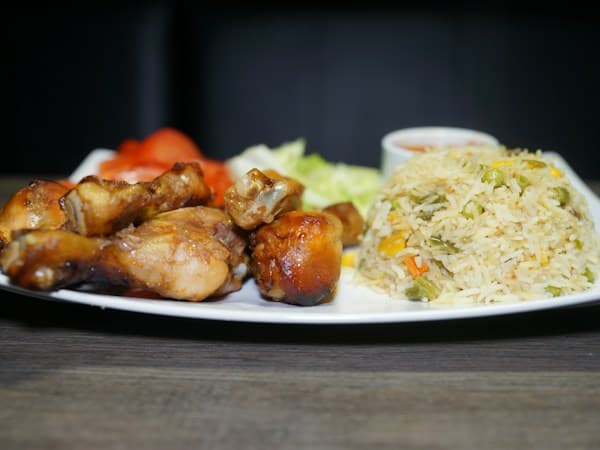
Typical Size: 4–6 oz each (115–170g)
Rich dark meat supported by the tibia bone with multiple tendons that soften pleasantly during simmering.
Best for: Finger-food salads, chicken soup, stew bases
Chef tip: Insert probe into the thickest muscular bulb. Connective tissue melts beautifully around 175°F–180°F.
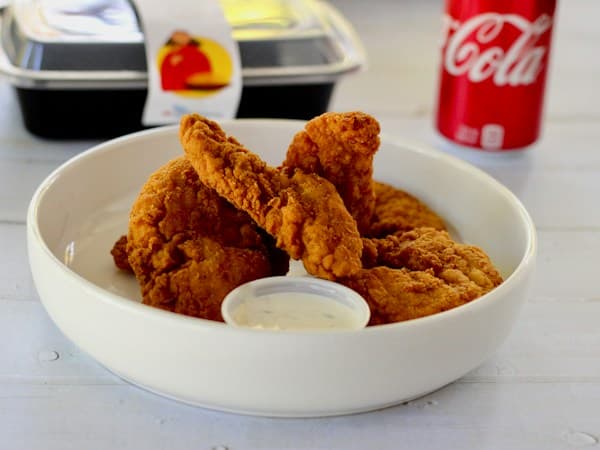
Typical Size: 1.5–2 oz each (40–60g)
Slender strip of meat beneath the breast. Extremely lean, quick-cooking, and easily overdone.
Best for: Toddler meals, quick wraps, high-protein snack bites
Chef tip: Keep flame on low simmer; they cook very fast. Check temperature at the 8-minute mark.
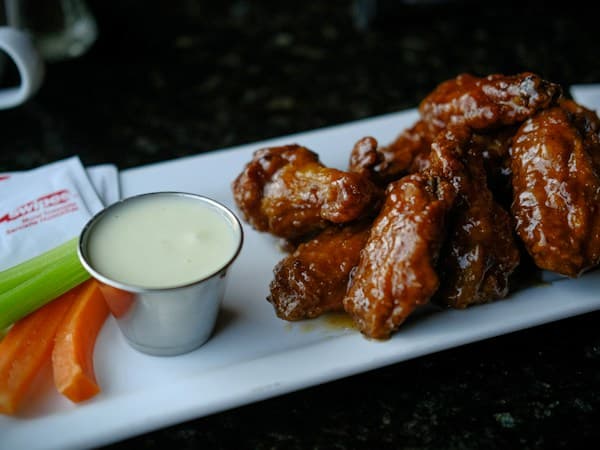
Typical Size: 3–4 oz each (85–115g)
High skin-and-bone ratio that infuses poaching liquid with natural gelatin. Great pre-cooking technique.
Best for: Pre-cooking before grilling or air frying, chicken soup broth
Chef tip: Poaching wings first cooks them safely through so you can finish them under a hot broiler or grill for crispy skin in minutes.
Master the gentle covered simmer technique used by professional culinary kitchens to yield tender, moist chicken that shreds effortlessly without ever turning dry or rubbery.
Never wash raw chicken under running water. Washing splashes invisible bacteria up to 3 feet around your kitchen sink. Pat chicken dry with clean paper towels and place directly into your pot.
Arrange your chicken pieces in an even, single layer in a wide saucepan, Dutch oven, or pot. Stacking or overcrowding causes uneven heat distribution and undercooked cold spots.
Pour cold water or broth over the chicken until it is submerged by 1/2 to 1 inch (2–3 cm). Add salt (1 tsp per quart) and aromatics: halved garlic cloves, fresh herbs, bay leaf, sliced ginger, or peppercorns.
Set burner to medium-high heat until the surface shows active tiny bubbles and gentle steam (180°F–195°F / 82°C–90°C). DO NOT let it reach a violent rolling boil, which squeezes protein fibers and makes chicken stringy.
Immediately turn the heat down to low, cover the pot tightly with its lid, and press START on this timer for your selected cut. Maintain tiny lazy bubbles.
When the timer rings, remove the lid and insert an instant-read digital food thermometer into the thickest part of the meat without touching bone. The internal temperature MUST reach at least 165°F (74°C).
Transfer cooked chicken to a clean cutting board or plate and let it rest for 5 minutes. This allows cellular juices to redistribute evenly throughout the meat fibers instead of spilling out.
The USDA Food Safety and Inspection Service (FSIS) states that visual checks (cutting meat open to look for clear juices) are scientifically unreliable. An accurate digital instant-read thermometer is your only true guarantee.
While 165°F (73.9°C) is the universal minimum threshold for bacterial destruction across all poultry, dark meat cuts (thighs, drumsticks, wings) behave differently culinarily due to dense connective tissue:
Extremely lean with virtually no fat. Pull from heat immediately once thickest center reaches 165°F (74°C). Overcooking beyond 170°F squeezes out moisture, leaving dry, chalky meat.
Rich in tough collagen and sinew. While food-safe at 165°F, cooking thighs to 175°F–180°F (79°C–82°C) breaks down collagen into rich, silky gelatin for fall-apart shreddable texture.
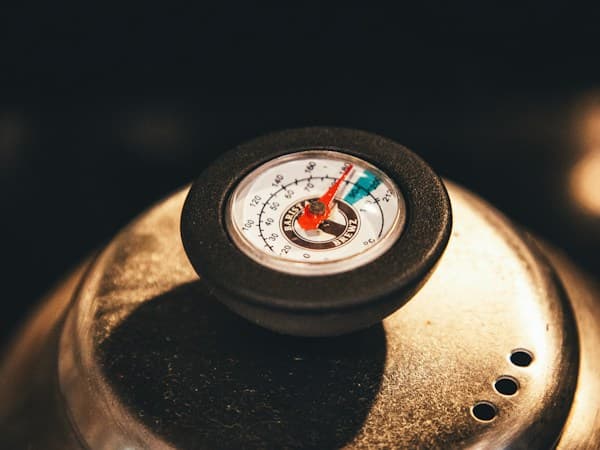
At 165°F (73.9°C), food-borne pathogens including Salmonella and Campylobacter are instantaneously destroyed throughout poultry muscle tissue.
Instant-read digital thermometers provide stabilized readings within 2–3 seconds with ±0.9°F accuracy.
Many home cooks mistakenly drop chicken into violently bubbling, rolling water at 212°F (100°C). Food science reveals why this produces tough, chalky meat:
At 212°F, poultry muscle proteins (myosin and actin) denature abruptly and contract like tightened rubber bands. This sudden contraction aggressively squeezes out intracellular moisture into the pot, leaving the chicken dry, stringy, and rubbery, regardless of when you stop.
Sub-boiling temperatures gently poach the meat. Proteins coagulate gradually without violent squeezing, keeping water molecules locked between protein filaments. The trapped steam inside a covered pot bathes the chicken in uniform 360-degree heat.
Chicken boiled in plain water tastes flat and washed out. By seasoning your poaching liquid, osmosis drives savory flavors deep into the chicken while simultaneously creating a rich broth for future cooking:
Add 1 teaspoon of kosher salt per quart of liquid. Without sufficient salt, seasoning will only coat the surface instead of seasoning all the way to the bone.
Toss in smashed garlic cloves, 1 bay leaf, halved onions or leeks, black peppercorns, and fresh thyme, parsley stems, or sliced fresh ginger.
A slice of fresh lemon peel, 2 tablespoons of dry white wine, or a teaspoon of apple cider vinegar brightens flavor and helps tenderize exterior surface fibers.
After resting for 5 minutes, transform your cooked chicken into shreds for salads, tacos, quesadillas, or meal prep using these three methods:
Place warm chicken on a cutting board. Hold one fork steady in the center while pulling shreds away with the second fork along the grain. Best for smaller 1–2 breast portions.
Place warm boneless chicken in a stand mixer bowl fitted with the paddle attachment. Run on Low speed for 20–30 seconds. Yields restaurant-grade fluffy shredded chicken instantly.
In a deep mixing bowl, insert standard beaters into the warm chicken and run on low speed for 30–45 seconds. Great for batch meal prep without heavy kitchen machinery.
A whole 3–4 lb chicken takes approximately 45 to 60+ minutes to boil gently. However, a single countdown timer cannot account for whole bird physics:
For weeknight speed and juiciness, breaking chicken into separate cuts (breasts, thighs, drumsticks) guarantees even heat penetration.
Quick diagnostic fixes for common boiled chicken issues, from undercooked meat to the mystery of harmless pink meat near the bone.
Chicken cut was thicker than standard, started slightly frozen in the center, or burner heat was too low.
Return chicken to the simmering liquid, cover tightly, and simmer for an additional 3–5 minutes. Re-check temp with thermometer.
Ensure chicken is completely thawed before cooking. For very thick breasts, butterfly or pound to uniform 3/4-inch thickness.
The liquid was boiling vigorously (212°F / 100°C) instead of gently poaching (180°F–195°F), squeezing out cellular water.
Toss shredded meat with 2–3 tablespoons of warm broth, olive oil, or sauce to restore surface lubrication.
Never boil chicken violently. As soon as liquid bubbles, drop heat to lowest flame and simmer covered.
Natural hemoglobin seepage from young broiler bones or nitric oxide reaction from aromatics in poaching broth.
If an accurate digital food thermometer confirms all thickest parts are 165°F (74°C) or higher, the chicken IS completely safe to eat.
Understand that color is NOT a reliable food safety indicator. Trust calibrated thermometer readings over visual color.
Denatured soluble proteins rapidly coagulated on a high boil without being skimmed.
Pour broth through a fine mesh strainer lined with a paper towel or cheesecloth.
Start chicken in cold water, bring up gently, and skim the grey foam right before covering with lid.
Boiled in plain unseasoned tap water without salt or aromatics.
Season the shredded or sliced chicken generously with coarse salt, cracked pepper, lemon zest, and olive oil.
Generously salt your poaching liquid (1 tsp fine salt per quart) and add smashed garlic, bay leaves, or onion halves.
Proper food safety begins before the pot is turned on and extends through storing leftovers. Follow these critical guidelines from the USDA Food Safety and Inspection Service.
Rinsing poultry does not remove pathogens. Water splashing off raw chicken sends invisible aerosol droplets contaminated with Salmonella and Campylobacter up to 3 feet around your kitchen sink, coating clean dishes, sponges, and counters.
Leaving frozen chicken to thaw at room temperature allows surface bacteria to multiply exponentially into dangerous levels within the danger zone (40°F–140°F / 4°C–60°C).
• Refrigerator method (preferred): Allow 24 hours on a bottom shelf.
• Cold water method: Seal chicken in a leak-proof bag, submerge in cold water, change water every 30 minutes.
Store cooked boiled chicken in airtight glass containers or zip-top bags at 40°F (4°C) or colder within 2 hours of cooking (or within 1 hour if room temperature is above 90°F).
When reheating refrigerated or thawed leftover chicken, all parts must be reheated to an internal core temperature of 165°F (74°C).
Comprehensive reference matrix comparing simmer times, bone status, typical piece weights, USDA minimum safe temperature, and optimal culinary tenderness targets.
| Chicken Cut | Bone | Typical Weight | Gentle Simmer Time | Safe Temp (USDA) | Culinary Target | Culinary Notes |
|---|---|---|---|---|---|---|
| Boneless Skinless Breast (Standard) | Boneless | 6–8 oz (170–225g) | 12–14 min | 165°F (74°C) | 165°F (do not exceed) | Lean and tender. Pull promptly at 165°F to keep maximum moisture. |
| Boneless Skinless Breast (Thick/Jumbo) | Boneless | 10–14 oz (280–400g) | 15–18 min | 165°F (74°C) | 165°F (do not exceed) | Large depth requires patience. Probe multiple thick spots. |
| Bone-In Split Breast | Bone-In | 12–16 oz (340–450g) | 20–25 min | 165°F (74°C) | 165°F (do not exceed) | Bone enhances poaching broth flavor; check center away from bone. |
| Boneless Skinless Thighs | Boneless | 4–6 oz (115–170g) | 14–16 min | 165°F (74°C) | 175°F (79°C) | Tolerant of extra time. Collagen melts into supreme tenderness at 175°F. |
| Bone-In Chicken Thighs | Bone-In | 5–7 oz (140–200g) | 20–25 min | 165°F (74°C) | 175°F (79°C) | Ideal for shredding or braised textures; probe thickest muscle. |
| Chicken Drumsticks | Bone-In | 4–6 oz (115–170g) | 20–25 min | 165°F (74°C) | 175°F–180°F | Connective tissues around joints require steady heat to soften. |
| Chicken Tenderloins (Tenders) | Boneless | 1.5–2 oz each | 8–10 min | 165°F (74°C) | 165°F (do not exceed) | Very fast cooking; watch closely and probe smallest piece first. |
| Chicken Wings (Whole / Cut) | Bone-In | 3–4 oz each | 12–15 min | 165°F (74°C) | 175°F (79°C) | Superb par-cooking step before broiling or air-frying for crisp skin. |
Culinary and food-safety answers backed by USDA food safety guidelines, food science research, and kitchen testing.
Standard boneless, skinless chicken breasts (6–8 oz) take 12 to 14 minutes at a gentle covered simmer. Larger or thicker breasts (10–12 oz) take 15 to 18 minutes. Bone-in split breasts require 20 to 25 minutes. Most importantly, always verify with an instant-read digital food thermometer that the thickest part registers at least 165°F (74°C).
Per USDA Food Safety and Inspection Service (FSIS) standards, all poultry must reach a safe minimum internal temperature of 165°F (73.9°C / 74°C) measured with a calibrated food thermometer in the thickest part of the meat without touching bone. At 165°F, dangerous bacteria such as Salmonella and Campylobacter are instantaneously destroyed.
Precision culinary tools
Time soft, medium & hard-boiled eggs with custom sizes & altitude compensation.
Time spaghetti to al dente perfection with taste-check alerts & salt ratios.
Time Basmati, Jasmine, and Brown rice with water ratios & steam rest tracking.
Time baby potatoes, russets, and yukon golds for fork tenderness.