Cook rice with the right timing for your rice type, cooking method, and preferred texture.
Different rice grains possess unique starch structures and moisture capacities. Compare varietal characteristics to pair with your favorite dish.
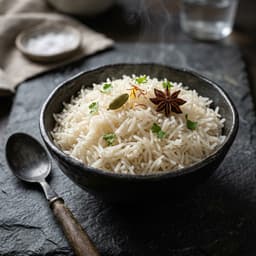
Starch Profile: High amylose (~22–24%), preventing clumping and starch stickiness.
Starting Ratio: 1.5 cups water per 1 cup rice
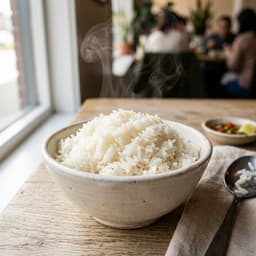
Starch Profile: Moderate amylose (~15–18%), giving a soft, tender, lightly sticky texture.
Starting Ratio: 1.25 to 1.33 cups water per 1 cup rice

Starch Profile: High amylose content ensures grains remain dry, distinct, and easy to separate.
Starting Ratio: 1.75 to 2.0 cups water per 1 cup rice
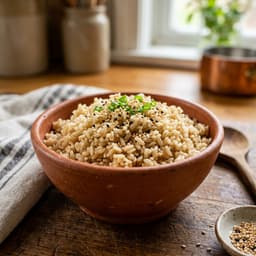
Starch Profile: Intact insoluble fiber bran layer slows water penetration and starch gelatinization.
Starting Ratio: 2.0 to 2.25 cups water per 1 cup rice
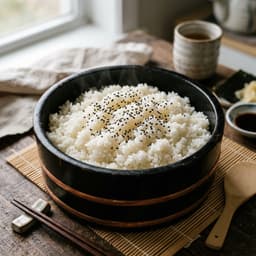
Starch Profile: High amylopectin content yields cohesive, glossy grains that stick pleasantly without turning to paste.
Starting Ratio: 1.1 to 1.2 cups water per 1 cup rice
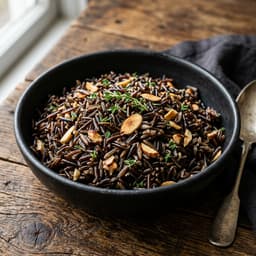
Starch Profile: Botanically an aquatic grass (Zizania); tough outer hull bursts into distinctive curly blooms.
Starting Ratio: 3.0 cups water per 1 cup rice
Whether you crave distinct, separate grains for a pilaf or cohesive stickiness for sushi, subtle adjustments to water ratios create your target bite.
Follow the classic culinary science method for evenly cooked, non-mushy grains that stay light and tender.
Use dry measuring cups or a kitchen scale for rice, and liquid measuring cups for water. Even an extra 2–3 tablespoons of liquid can turn delicate jasmine or basmati mushy.
Swirl the dry grains in cold water inside a fine-mesh strainer or bowl. This removes residual milling starch (*free amylose*) that would otherwise form a gluey paste in boiling water.
Place rice, measured water, and a pinch of salt (½ tsp per cup) in your saucepan. Leave the pot uncovered until large, active bubbles churn across the entire surface.
Give one gentle stir to ensure no grains stick to the floor of the pot. Snap on a tight lid, reduce burner flame to low, and hit 'Start Timer' on CookTiming. Trapped steam cooks the grain core.
Turn off the burner and slide the saucepan to a cool burner. Do NOT open the lid to inspect. Start the CookTiming Rest Timer to initiate the essential steam redistribution phase.
During rest, moisture trapped at the soggy bottom layer migrates into the drier upper grains. Surface starches firm up (*retrograde*), preventing the grains from rupturing when stirred.
Uncover the pot and use a wide fork or moistened rice paddle to lift grains from the bottom, slicing gently rather than mashing. Let steam vent for 60 seconds before serving.
Why there is no single universal ratio: understanding the difference between water absorbed by the grain and water lost to evaporation.
Culinary science testing (such as Food Lab and university cereal studies) demonstrates that almost all milled white rice grains chemically absorb exactly a 1:1 ratio of water by volume to become fully gelatinized and tender.
The extra water in stovetop cooking is not absorbed by the grain; it is lost as steam vapor escaping past the lid during cooking. Wider pots with loose-fitting lids lose significantly more moisture, requiring higher initial ratios.
1.5 cups water per 1 cup rice
1.25 to 1.33 cups water per 1 cup rice
1.75 to 2.0 cups water per 1 cup rice
2.0 to 2.25 cups water per 1 cup rice
1.1 to 1.2 cups water per 1 cup rice
3.0 cups water per 1 cup rice
The Batch Scaling Trap: If you double your rice from 1 cup to 2 cups in the same saucepan, do not double all extra evaporation water. For example, if 1 cup of Basmati uses 1.5 cups water (1 cup absorbed + 0.5 cup evaporated), 2 cups of Basmati in the same pot only needs ~2.5 to 2.75 cups (2 cups absorbed + 0.5–0.75 cup evaporated).
Turning off the burner does not mean the rice is finished cooking. When the simmer timer expires, the bottom layer of rice is waterlogged and overheated, while the top grains remain dry.
Moisture Equilibrium: In a sealed, resting pot off the heat, steam pressure equalizes naturally, gently softening the top layer while allowing excess liquid at the bottom to absorb.
Starch Retrogradation (Firming the Hull): Freshly boiled starches are fragile and sticky. Resting allows surface amylose molecules to cool slightly and re-align (*retrograde*), creating a firm outer coat that prevents the grains from mushing when fluffed.
Fluffing Without Mashing: If you dig a fork into hot rice right after turning off the stove, you crush the hot, expanded starch granules. After a 10-minute rest, grains separate cleanly and effortlessly.
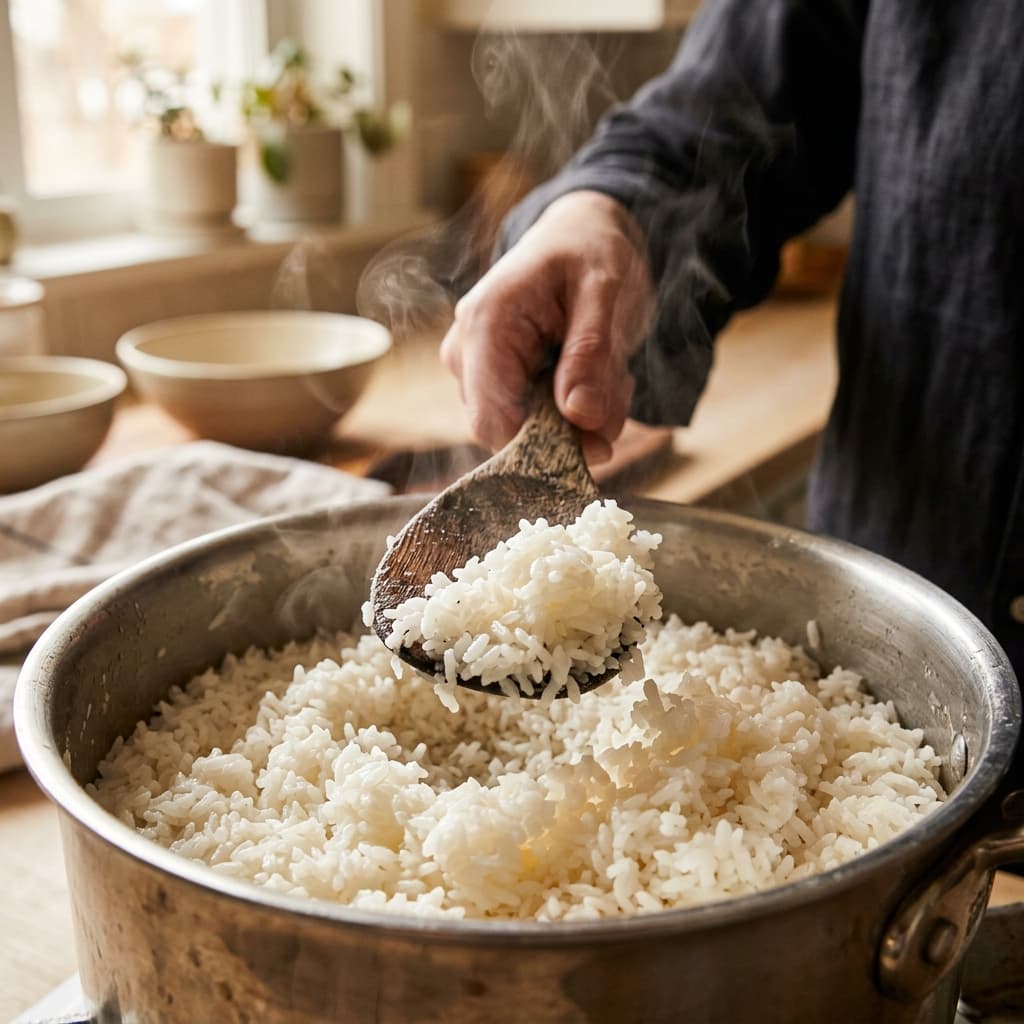
Fluffing after the 10-minute steam rest releases excess vapor without crushing grains.
On a standard stovetop using the covered absorption method, total cooking time consists of two phases: Covered Low Simmer + Off-Heat Steam Rest.
*Always confirm timing with your specific rice brand's packaging, as harvest age, grain moisture content, and milling polish create subtle variations.
Cooking rice is a thermodynamic reaction where starch granules absorb boiling water, swell, and gelatinize. Several kitchen factors directly alter this process:
Long-grain rice (Basmati) has high amylose starch (~24%), forming long, rigid straight chains that do not break down into glue. Short-grain sushi rice has high branched amylopectin, which creates natural glossy stickiness.
A wide Dutch oven has a massive surface area that vents steam much faster than a tall, narrow 2-quart saucepan. If your pot has a loose lid with steam vent holes, you will lose 15% more water to evaporation.
During industrial milling and packaging, rice grains rub together, creating fine powdery starch dust (*free amylose*). Rinsing washes this powder down the drain, preventing sticky glue from forming between grains.
At elevations above 3,000 feet, water boils cooler than 212°F (100°C). Because heat transfer is less intense, starches require approximately 10% to 15% more liquid and 3 to 5 extra minutes of simmer time.
Every time you crack open the lid, steam escapes and pot temperature plummets. This starves the top layer of grains of the moisture needed to cook, resulting in a crunchy top and soggy bottom.
Once water boils, the heat must immediately be dropped to the lowest possible simmer. High heat evaporates water too fast and scorches the bottom layer of rice before internal starches can hydrate.
If you scoop rice immediately when the timer finishes, you rupture soft, fragile starches. Leaving the pot covered off-heat allows moisture to equalize and starch hulls to firm up.
Stirring rice while simmering abrasively rubs grains against each other, bursting expanded starch cells into the cooking water and creating a thick, gluey porridge (great for risotto, fatal for pilaf).
Using a generic "2-to-1" ratio for delicate Thai Jasmine rice will drown the grains in excess liquid. Always tailor water volume to the specific grain.
Cooked rice left at room temperature past 2 hours allows heat-resistant Bacillus cereus spores to germinate and produce toxins. Refrigerate prompt leftovers in shallow dishes.
If your rice didn't turn out as expected, identify the culinary symptom below and apply the rapid kitchen fix.
Why it happened: Water boiled off too rapidly due to excessive heat, loose lid seal, or insufficient initial liquid ratio.
Why it happened: Too much water added initially, over-stirred during simmering (rupturing starches), or rice was not rinsed.
Why it happened: Burner heat was not reduced low enough, pot base is too thin, or water evaporated before grains fully cooked.
Why it happened: Skipped the off-heat resting phase, or pot lid was lifted repeatedly during cooking, venting steam.
According to the USDA and FDA, cooking rice does not automatically eliminate all foodborne risks. Uncooked rice naturally harbors spores of Bacillus cereus, a bacterium that can survive the heat of boiling water.
Never leave cooked rice at room temperature for more than 2 hours (or 1 hour if your kitchen is over 90°F / 32°C). Between 40°F and 140°F, spores germinate and produce heat-resistant toxins.
Do not put a deep, dense pot of hot rice directly into the fridge; the center will stay warm for hours. Spread rice out in shallow airtight containers (less than 2 inches deep) for rapid chilling.
Consume refrigerated rice within 3 to 4 days. When reheating, ensure the entire portion is steaming hot throughout (reaching at least 165°F / 74°C). Only reheat leftovers once.
*Sources: USDA Food Safety and Inspection Service (FSIS), FDA Food Code, and University Extension Food Safety Guidelines.
Comprehensive comparison across stovetop absorption and pasta-style boiling methods for all major varieties.
| Rice Variety | Category | Water Ratio (Absorption) | Simmer Duration | Boil & Drain | Rest Time | Finished Texture Profile |
|---|---|---|---|---|---|---|
| Basmati Rice | Aromatic Long Grain | 1.5 cups per 1 cup rice | 12 to 14 min | 10 to 11 min | 10 min | Dry, distinct, elongated grains; zero clumping. |
| Jasmine Rice | Aromatic Long Grain | 1.25 to 1.33 cups per 1 cup rice | 12 to 15 min | 10 to 11 min | 10 min | Tender, soft, floral; lightly clinging. |
| White Long-Grain | Pantry Long Grain | 1.75 to 2.0 cups per 1 cup rice | 15 min | 12 min | 10 min | Fluffy, neutral, sturdy, separate grains. |
| Sushi / Short-Grain | Short Grain (Japonica) | 1.1 to 1.25 cups per 1 cup rice | 15 min | 12 to 13 min | 10 to 15 min | Plump, pearly, cohesive, glossy stickiness. |
| Brown Rice (Long/Med) | Whole Grain | 2.0 to 2.25 cups per 1 cup rice | 40 to 45 min | 30 min | 10 min | Nutty, firm chew; high bran fiber resistance. |
| Wild Rice | Aquatic Seed | 3.0 cups per 1 cup rice | 45 to 50 min | 35 to 40 min | 5 min | Earthy, robust pop; split hull exterior. |
Dry, distinct, elongated grains; zero clumping.
Tender, soft, floral; lightly clinging.
Fluffy, neutral, sturdy, separate grains.
Plump, pearly, cohesive, glossy stickiness.
Nutty, firm chew; high bran fiber resistance.
Earthy, robust pop; split hull exterior.
Everything you need to know about grain varieties, water ratios, steam resting, and safe storage.
Start the CookTiming timer the moment your pot reaches a rolling boil, you cover it with a tight-fitting lid, and you lower the burner flame to its lowest simmer setting. Do not start the timer while heating the cold water.
Precision culinary tools
Time soft, medium & hard-boiled eggs with custom sizes & altitude compensation.
Time spaghetti to al dente perfection with taste-check alerts & salt ratios.
Time chicken breasts, thighs, and tenders safely with 165°F temperature check.
Time baby potatoes, russets, and yukon golds for fork tenderness.